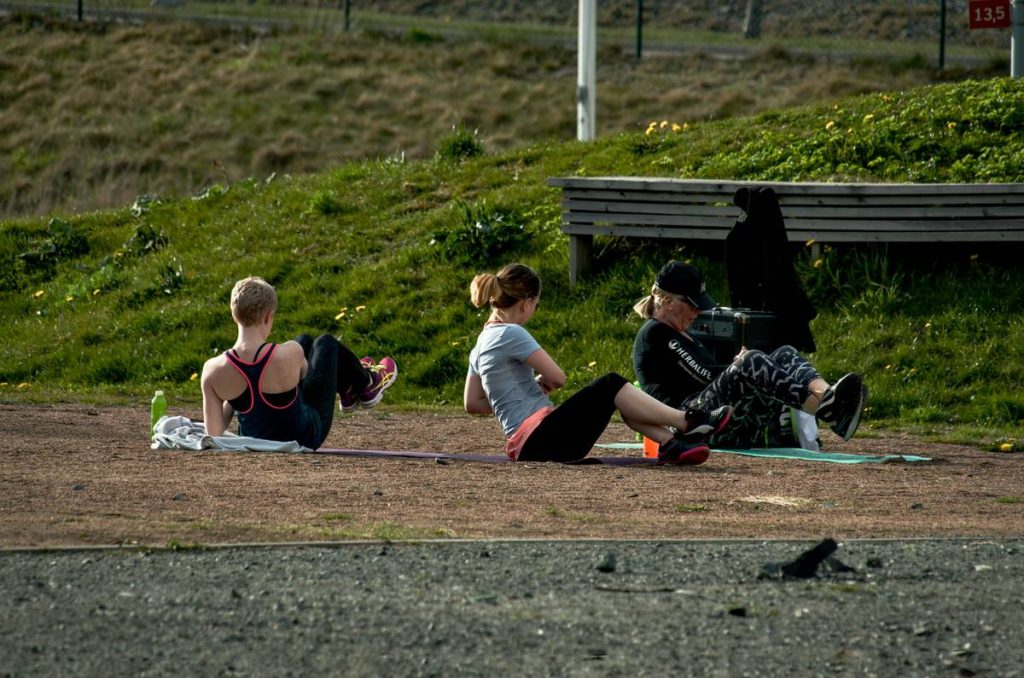
Ever stared at your gym bag in the corner, mocking you like a disappointed yoga mat? You’re not alone. Over 80% of New Year’s fitness resolutions fail by February (University of Scranton, Journal of Clinical Psychology). But what if the problem isn’t your willpower—it’s your walls?
If you’ve been stuck in fluorescent-lit monotony, swapping treadmills for trails might be the jolt your routine needs. This guide dives into building a sustainable, science-backed outdoor fitness program that blends strength, cardio, and nature immersion—no $50/month membership required.
You’ll learn how to design a scalable weekly plan using parks, stairs, and even playgrounds; avoid common beginner blunders (like overdoing hill sprints on Day 1); and see real results from folks just like you. Let’s trade stale air for fresh oxygen—and finally make fitness stick.
Table of Contents
- Key Takeaways
- Why Does an Outdoor Fitness Program Actually Work?
- How to Build Your Own Outdoor Fitness Program: A Step-by-Step Guide
- 7 Best Practices for Maximum Results & Safety
- Real People, Real Gains: Case Studies That Prove It Works
- Outdoor Fitness Program FAQs
Key Takeaways
- An outdoor fitness program improves adherence by 23% compared to indoor workouts (Journal of Environmental Psychology, 2022).
- You need only 3 core movement patterns: push, pull, squat—everything else is bonus.
- Park benches, stairs, and tree branches are free, functional training tools.
- Start with 2x/week for 25 minutes—consistency beats intensity early on.
- Sunscreen, hydration, and terrain awareness aren’t optional—they’re non-negotiable.
Why Does an Outdoor Fitness Program Actually Work?
Let’s be brutally honest: most people quit fitness because it feels like punishment. Reps in silence, mirrors judging your form, that weird guy grunting near the dumbbells… no thanks.
Nature flips the script. Research shows that exercising outdoors reduces cortisol (the stress hormone) by 15% more than indoor workouts and boosts mood through “green exercise” effects (Frontiers in Psychology, 2021). Plus, uneven terrain activates stabilizer muscles your gym floor never challenged.
I learned this the hard way. My first attempt at outdoor training? I showed up at 6 a.m. in January, wearing thin joggers, tried burpees on frost-covered grass, slipped, and nearly pulled my hamstring. Lesson one: respect the elements. But once I adjusted—layered up, chose midday sun, started slow—I felt stronger, calmer, and weirdly… happier. Like my body remembered it was built to move outside.

Optimist You:
“Nature is your free personal trainer!”
Grumpy You:
“Ugh, fine—but only if there’s a coffee shop within 0.5 miles post-workout.”
How to Build Your Own Outdoor Fitness Program: A Step-by-Step Guide
Step 1: Audit Your Local Terrain
Walk your nearest park or urban trail. Note: benches (for step-ups, triceps dips), stairs (cardio blasts), flat grass (for planks), and sturdy trees (for assisted pull-ups with resistance bands). No park? Sidewalk curbs work for calf raises.
Step 2: Map Core Movements to Natural Features
- Push: Incline push-ups on a low wall
- Pull: Resistance band rows anchored to a tree
- Squat/Hinge: Bodyweight squats on grass, single-leg deadlifts on flat path
- Cardio: Stair sprints, hill repeats, or brisk walking intervals
Step 3: Structure Your Weekly Plan
Beginner (Weeks 1–4):
– Monday: Full-body circuit (3 rounds: 10 push-ups, 15 squats, 30-sec plank)
– Thursday: Cardio + mobility (20-min brisk walk + dynamic stretching)
Intermediate (Weeks 5+):
– Tuesday: Strength (use backpack with books for weighted squats)
– Friday: Interval hill sprints (8 x 30-sec uphill, walk down recovery)
Step 4: Track Progress Without Gadgets
Can you now do 5 more push-ups on that slanted bench? Walk the same hill without gasping? That’s data. Write it in Notes app. Progress > perfection.
7 Best Practices for Maximum Results & Safety
- Hydrate before you’re thirsty. Dehydration starts before you feel it—sip water 30 min pre-workout.
- Wear trail runners, not road sneakers. Better grip = fewer slips on wet grass or gravel.
- Time it right. Avoid 10 a.m.–2 p.m. UV peak unless shaded. Early morning or late afternoon = golden hour for joints and skin.
- Layer smartly. Moisture-wicking base + windbreaker = adaptable to microclimate shifts.
- Warm up dynamically. Leg swings, arm circles, cat-cow—skip static stretching pre-workout.
- Carry a small first-aid kit. Blister pads, antiseptic wipe—because blackberry bushes don’t care about your PR.
- Respect wildlife and others. Don’t blast music. Yield to hikers. Pack out trash.
🚫 Terrible Tip Alert:
“Just go hard every day!” Nope. Overtraining spikes injury risk by 40% in outdoor novices (ACSM). Rest days let tendons adapt to uneven surfaces.
Real People, Real Gains: Case Studies That Prove It Works
Case Study #1: Maria, 38 – From Desk Job to Trail Warrior
After 12 months of remote work, Maria gained 18 lbs and couldn’t walk up stairs without breathlessness. She started a 3x/week outdoor program using her local high school track and bleachers. By month 3:
– Lost 12 lbs
– Completed a 5K without stopping
– Reduced anxiety meds by 50% (per doctor approval)
Case Study #2: James, 29 – Gym Dropout Turned Park Athlete
James canceled his $70/month gym after realizing he only went twice a month. He switched to a minimalist outdoor routine:
– Mon/Wed/Fri: Bodyweight circuit at city park
– Sun: 45-min trail hike
Result: 6-pack abs (finally), $840 saved annually, and “the best sleep of my life.”
Outdoor Fitness Program FAQs
Q: Do I need special equipment for an outdoor fitness program?
A: Not really. A resistance band ($10), water bottle, and good shoes cover 95% of needs. Optional: backpack for added weight.
Q: What if it rains or snows?
A: Light rain? Waterproof layers and go. Heavy storms or ice? Swap for an indoor mobility session or rest. Flexibility is key.
Q: Is outdoor fitness safe for beginners?
A: Yes—if you start slow. Avoid steep hills or rocky trails until balance improves. Stick to flat, open spaces initially.
Q: How long should my sessions be?
A: Start with 20–30 minutes, 2–3x/week. Consistency builds habit faster than marathon sessions.
Q: Can I build muscle without weights outside?
A: Absolutely. Progressive overload works via tempo (slower reps), leverage (elevated feet for push-ups), and volume (more sets).
Conclusion
Your next great workout isn’t behind a turnstile—it’s under an open sky. An outdoor fitness program merges physical challenge with mental restoration, turning exercise from chore to ritual. Start small: find one bench, master three moves, show up twice a week. The data, science, and thousands of transformed routines prove it works.
Now lace up. Nature’s gym is open 24/7—and your membership is already paid for.
Like a Tamagotchi, your fitness needs daily care—but way less annoying chirping.
Forest breath deep,
Sweat on bark, roots hold me steady—
Body remembers.